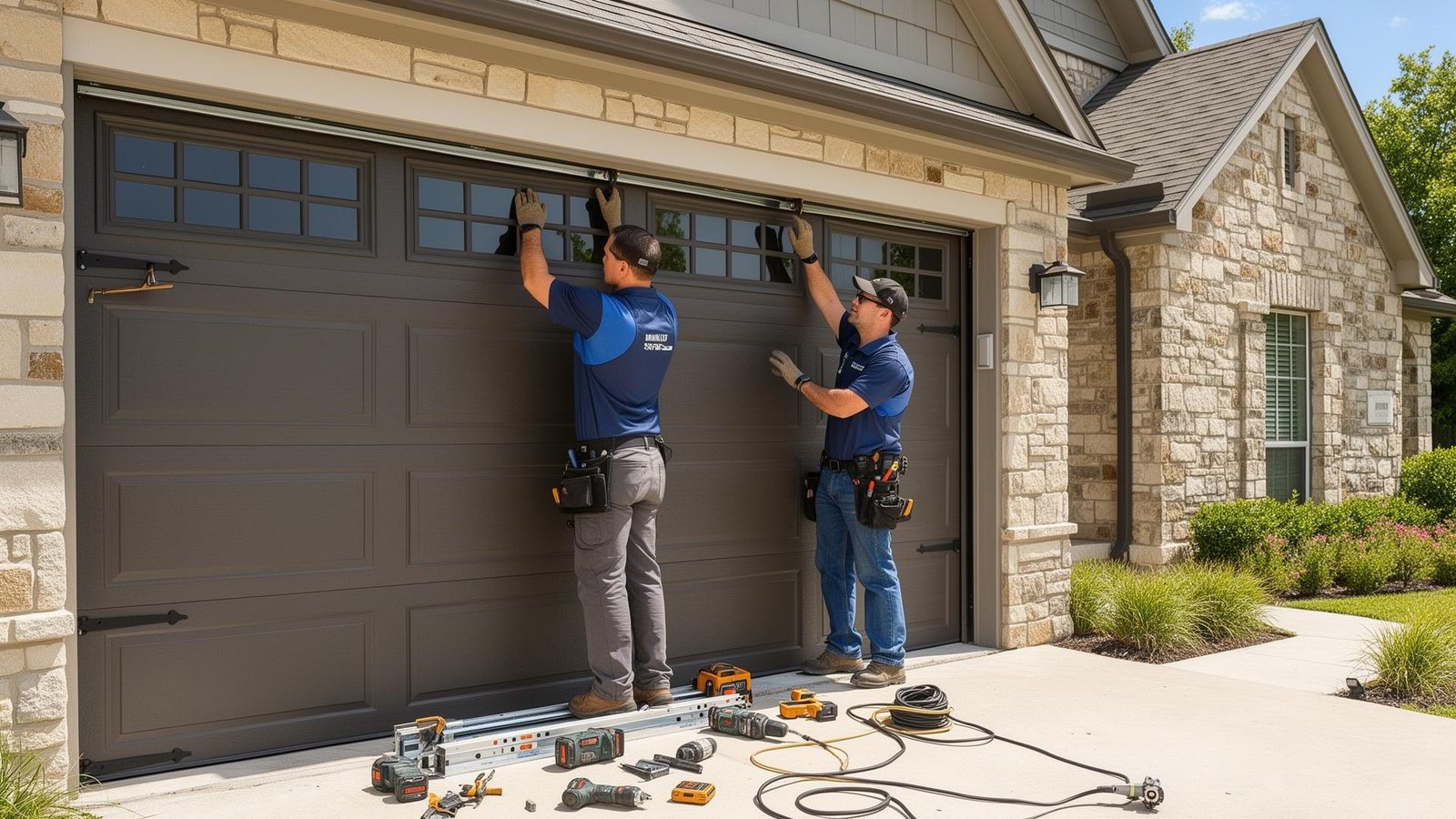
That grinding noise your garage door makes every morning – the one you’ve been ignoring for three months – is almost always the rollers. They’re small, nobody thinks about them, and they spend their entire life spinning under the full weight of a door that can weigh anywhere from 150 to 300 pounds. Eventually they wear out. When they do, everything else on the door starts suffering for it.
The opener strains harder. The tracks wear faster. Springs work against more resistance than they’re supposed to. And the noise gets worse until someone finally deals with it.
What Rollers Do
Along each side of the door, attached to the hinges, are anywhere from ten to twelve small wheels that ride inside the track. Every time the door moves, those wheels are spinning – through the vertical section, around the curve, and across the horizontal section overhead. They don’t get lubricated automatically. Nobody checks them during a regular week. They just spin, quietly wearing down, until something makes enough noise to get your attention.
The Different Types
Steel rollers are what most doors come with from the factory because they’re cheap. They work fine when new and properly greased, but metal on metal inside a steel track is loud, and once the lubrication dries out – which it does – they get louder fast. Figure on seven to ten years before they need replacing, less if they never get maintained.
Nylon rollers are what most people switch to when steel wears out and they want something better. Quieter, longer lasting, and the sealed ball bearing versions don’t need lubrication. If you’ve ever been in a room next to the garage while someone opens the door, you already know why the noise difference matters. Good nylon rollers with sealed bearings last twelve to fifteen years without much fuss.
High-cycle rollers are built for doors that run constantly – commercial use, busy households, anyone who just doesn’t want to think about rollers again for a very long time. Rated for 100,000 cycles or more. More than most residential doors need but worth knowing about.
How to Tell Yours Are Going
Get a flashlight and actually look at them while the door is open. The wheel on each roller should be round, smooth, and intact. Chipped edges, flat spots, visible cracking – any of that means the roller is done.
Beyond the visual stuff, here’s what worn rollers feel like in practice:
The door makes noise it didn’t used to make. Grinding and squealing are the obvious ones, but a rhythmic clicking or rattling as the door moves is also rollers, usually ones that have developed a flat spot from years of sitting in one position.
The door shakes or shudders moving through the track. A door that travels smoothly doesn’t shake. One running on worn rollers bounces and hesitates because the wheels aren’t rolling properly anymore – some of them are dragging.
The opener sounds like it’s working harder than it used to. Bad rollers create friction. The opener compensates by pulling harder. Run that long enough and the motor wears out before its time.
A roller has come off the track entirely. That’s not a keep-using-the-door situation. The track can bend, cables can snap, and a door that comes off its track under spring tension is dangerous.
Austin Makes This Worse
The heat here is rough on anything made of rubber or nylon. Summer temperatures bake the roller material, the expansion and contraction between seasons adds up over years, and a garage that gets direct afternoon sun can see interior temperatures well past 130 degrees on hot days. Original rollers on a ten-year-old Austin door have had a harder life than the same rollers on a door in a cooler climate. Keep that in mind when you’re deciding whether to replace them or wait another year.
How Long Do Garage Door Rollers Actually Last?
Steel rollers on a well-maintained door – seven to ten years, less if lubrication gets skipped. Nylon with sealed bearings push twelve to fifteen years without much attention.
Those numbers assume average use and average conditions. In Austin they mean less than they would somewhere cooler. The heat here bakes rubber and nylon hard, the temperature gap between January and August puts repeated stress on the material, and a garage that faces west and catches afternoon sun gets brutally hot inside. Rollers on a ten-year-old Austin door have earned their replacement even if they look okay from a distance.
A household running the door four or five times a day will also chew through rollers faster than one using it twice. If your door gets heavy daily use and you can’t remember the last time anyone looked at the rollers, that’s probably your answer right there.
Steel rollers every seven to ten years, nylon with sealed bearings every twelve to fifteen. In Austin, lean toward the lower end of those ranges. If the door is noisy or shaking, check them regardless of age.
Yes. Every extra bit of friction the rollers create is load the opener has to pull against on every single cycle. Motors aren't built to compensate for that indefinitely. Worn rollers burn out openers earlier than they should fail.
Nylon with sealed steel ball bearings. Quieter than steel, longer lifespan, no ongoing lubrication required. It's what most good garage door companies install as standard when they're doing a replacement.
If the door is ten-plus years old, replace the set. One worn roller on an old door means the others are close behind it. Doing them all at once costs the same in labor and saves a second call in six months.
Middle or upper roller on an otherwise straight track - sometimes yes, you can guide it back. Bottom roller, or anywhere the track looks bent or damaged - stop using the door. Forcing a door with a roller off the track risks bending the track further and puts real stress on the cables.
Door Making Noise or Running Rough?
Worn rollers are one of those things that seem minor right up until they cause something more expensive to fail. If your door is grinding, shaking, or the opener sounds like it’s struggling, it’s worth getting eyes on it sooner rather than later.
We’re out in Austin, Cedar Park, Round Rock, Pflugerville, Georgetown, and the surrounding area every day. Give us a call and we’ll take a look, tell you exactly what’s going on, and get it sorted. Get a free quote today.
Share this :
Facebook
Twitter
WhatsApp
Email

wasiimlatiif142@gmail.com
Get free tips and resources right in your inbox, along with 10,000+ others
Latest Post

April 20, 2026
April 20, 2026